
Bench Warrants in Sumter County
A bench warrant tells law enforcement to bring someone back before the judge who issued it. In Sumter County, the trigger you will see most often is failure to appear, usually shortened to FTA. Georgia's uniform misdemeanor rules allow a court to issue an order for apprehension when a defendant misses the time and place printed on a citation. Americus Municipal Court adds its own warning: a missed date, or a payment that arrives late, can bring an arrest warrant and a license consequence. The real cause depends on the file. It might be a missed hearing, a failure to comply, or an unresolved traffic or ordinance matter. Georgia sources say "bench warrant" or "order for arrest." Sumter sources never use the phrase "capias pro fine." The order stays tied to its own court, so pinning down the venue matters far more than hunting a county-wide list, and the sheriff publishes no public warrant list for Sumter County. When you call about an older matter, ask for more than a yes or no. Get the issue date, the current status, the case number, and the court event that produced the order. Then ask whether service occurred. Ask whether the judge later recalled or quashed the warrant. Ask whether a new appearance date replaced the missed setting. If the sheriff gives you the answer, confirm it against the court file. If the clerk gives it, ask whether notice of the latest order reached the serving agency. That two-part check matters in Sumter County, because a docket and an enforcement record can update at different times.
Sumter County FTA Notice Rules
Do not count on a reminder before a Sumter County bench warrant issues. The Georgia uniform misdemeanor rules let a court adopt a mailed notice procedure. A court that adopts it may send first-class mail or a postcard and allow 30 days to respond. Nothing in the rule forces every court to give that extra notice. The citation, bond paper, summons, or last order controls. A lost reminder does not mean the setting was removed. Call the named clerk with the case or citation number handy. Ask whether FTA was entered, whether the warrant is still active, and whether a new setting, a written motion, a bond, or a personal appearance is required.
Note: An optional mailed warning is not a countywide grace period, so confirm the docket with the issuing Sumter County court.
How a Bench Warrant Is Issued
The process always starts inside an existing case. When a required appearance or condition is missed, the judge reviews the docket and may enter a warrant. That order authorizes apprehension and a return to court. It does not resolve the charge or take the place of the hearing. One office records the order while law enforcement receives the process for service. Sumter County splits its venues. State Court takes county misdemeanors and county traffic. Municipal courts handle city traffic and ordinances. Superior Court handles felony matters, and juvenile files are restricted. The Sumter County Magistrate Court handles criminal warrant applications and first appearances. The Sheriff's Court/Courthouse Security unit serves warrants and court orders issued by county courts.
Americus Bench Warrant Warning
Americus Municipal Court gives the plainest city warning in Sumter County. The citation or bond paper controls the date and place. Miss the appearance, or let a payment reach the clerk after court, and the result may be a warrant, a license suspension, or both. The court posts its dates, continuance information, FTA documents, and a reset request. Treat a reset link as a process aid only. It is not proof of recall. Ask whether the court accepted the request, whether the judge acted on the warrant, and whether a written disposition exists. If DDS received notice, the court action and the DDS status each need review. The clerk explains procedure; a lawyer advises on custody and plea concerns.
Bench Warrant vs Arrest Warrant
Both orders can put a person in custody, but they start differently. A Sumter County bench warrant enforces an obligation inside an existing case. An arrest warrant grows out of sworn facts and a probable-cause finding about an alleged offense. The difference shapes what file exists, what material is public, and how the court responds.
| Feature | Bench Warrant | Arrest Warrant |
|---|---|---|
| Trigger | Missed setting or order | Probable cause from sworn facts |
| Case | Usually already open | May start criminal process |
| Next question | What resets or recalls it? | What surrender, bond, and hearing apply? |
| Route | Issuing court first | Court and sheriff |
See Sumter County arrest warrants for the probable-cause route.
Sumter County Traffic Court Fork
The Clerk of Superior and State Court keeps county traffic files but not city offenses. A county citation points to State Court or the county clerk. Americus and Leslie tickets stay with their municipal courts. Plains publishes municipal staff, while Andersonville and De Soto give city contacts without a warrant portal. Before you call, have the legal name, date of birth if requested, citation number, date, and issuing agency ready. Ask whether the ticket was adjudicated, whether FTA was entered, and whether the judge issued a warrant. Then ask what proof will show recall. The Leslie Municipal Court source lays out that city's separate citation route.
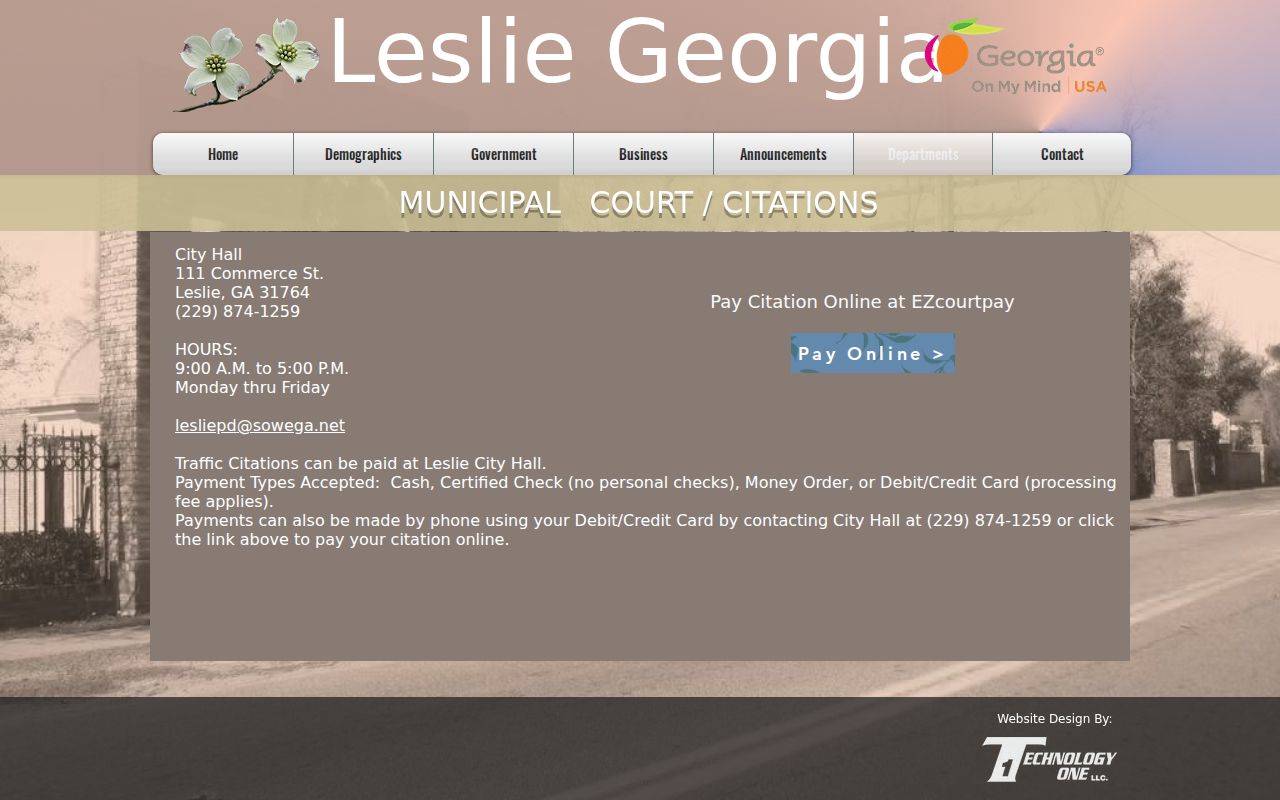
Leslie traffic payments and court questions run through City Hall. For Sumter County drivers, that office, not the county traffic clerk, handles them.
Resolve Sumter County Bench Warrants
No single recall rule covers every Sumter County court. Each judge sets the terms. One city traffic case may just need a reset. A different file could take a motion to recall or quash, a bond, a first appearance, proof of compliance, or a judge's order. Recall and quash both mean court action that withdraws or sets the warrant aside.
- Identify the court from the citation, notice, or docket and confirm status.
- Ask the clerk what procedure the judge accepts. Consult a lawyer about a motion or planned appearance.
- Coordinate surrender, bond, payment, or hearing before arriving. Sumter publishes no warrant-only window or universal bond schedule.
- Keep the signed order, receipt, bond paper, case number, and any DDS release. Recheck court and sheriff records.
Caution: An active Sumter County bench warrant can lead to custody, and a phone call alone does not withdraw the judge's order.
Juvenile Bench Warrants in Sumter
Juvenile matters follow a separate path in Sumter County. The Sumter FAQ warns that a missed served date can trigger a juvenile bench warrant. Contempt or a fine up to $300 may follow. Because juvenile records are confidential, these orders never appear in a public roster or an adult case search. A parent, guardian, authorized person, or lawyer should contact Juvenile Court at (229) 928-4569. Ask what identity or authority the court needs. Ask which document controls the case. That privacy limit does not erase the warrant; it simply points you to the right office. County guidance also asks anyone needing disability, language, or other help to call the clerk at least 10 business days before a hearing, or as soon as possible.
Which Sumter County Court Issued It
The issuing judge controls recall. The Sumter County sheriff can confirm or serve a warrant but cannot cancel it. The Sumter County courts directory maps the local venues. Superior and State records sit with the Clerk of Superior and State Court at (229) 928-4537, while Magistrate Court uses (229) 928-4524. The Sheriff's Office can be reached at (229) 924-4094, 352 McMath Mill Road.
County court file
Use the court on the docket, then check service with the sheriff if directed.
Clerk: (229) 928-4537
City court file
Call the municipal clerk on the citation. Americus uses (229) 924-3677; Leslie uses (229) 874-1259.
Warrant service
Sheriff Administration and Court Security process or serve criminal warrants.
Sheriff: (229) 924-4094
The Leslie Police source gives the city serving-agency contact.
The police contact complements the municipal clerk route, while emergencies remain directed to 911.
Prove a Sumter Warrant Recall
A receipt is not the same as a signed recall. Get the case number, the order date, and the disposition in writing. Then pin down what the payment did: resolve the charge, post funds, or lead the judge to withdraw the warrant outright. Keep a note of which Sumter County office answered and the date of each call.
- Active
- The order remains open, subject to confirmation.
- Recalled
- The issuing court withdrew the warrant.
- Quashed
- The court set it aside by order.
- Served
- Law enforcement executed process; the case continues.
- FTA
- Failure to appear at a required setting.
For a traffic failure to appear, check the Georgia DDS release process. Most Sumter County courts send releases electronically, but DDS still advises verifying.